Trump Ousts Five Indiana GOP Senators Who Blocked His Redistricting Map
Five of seven Indiana Republican state senators targeted by President Donald Trump over a redistricting vote lost their primaries on Tuesday to challengers he endorsed. The purge of state-level incumbents was the sharpest display yet of Trump's grip on the Republican Party ahead of the November midterms.
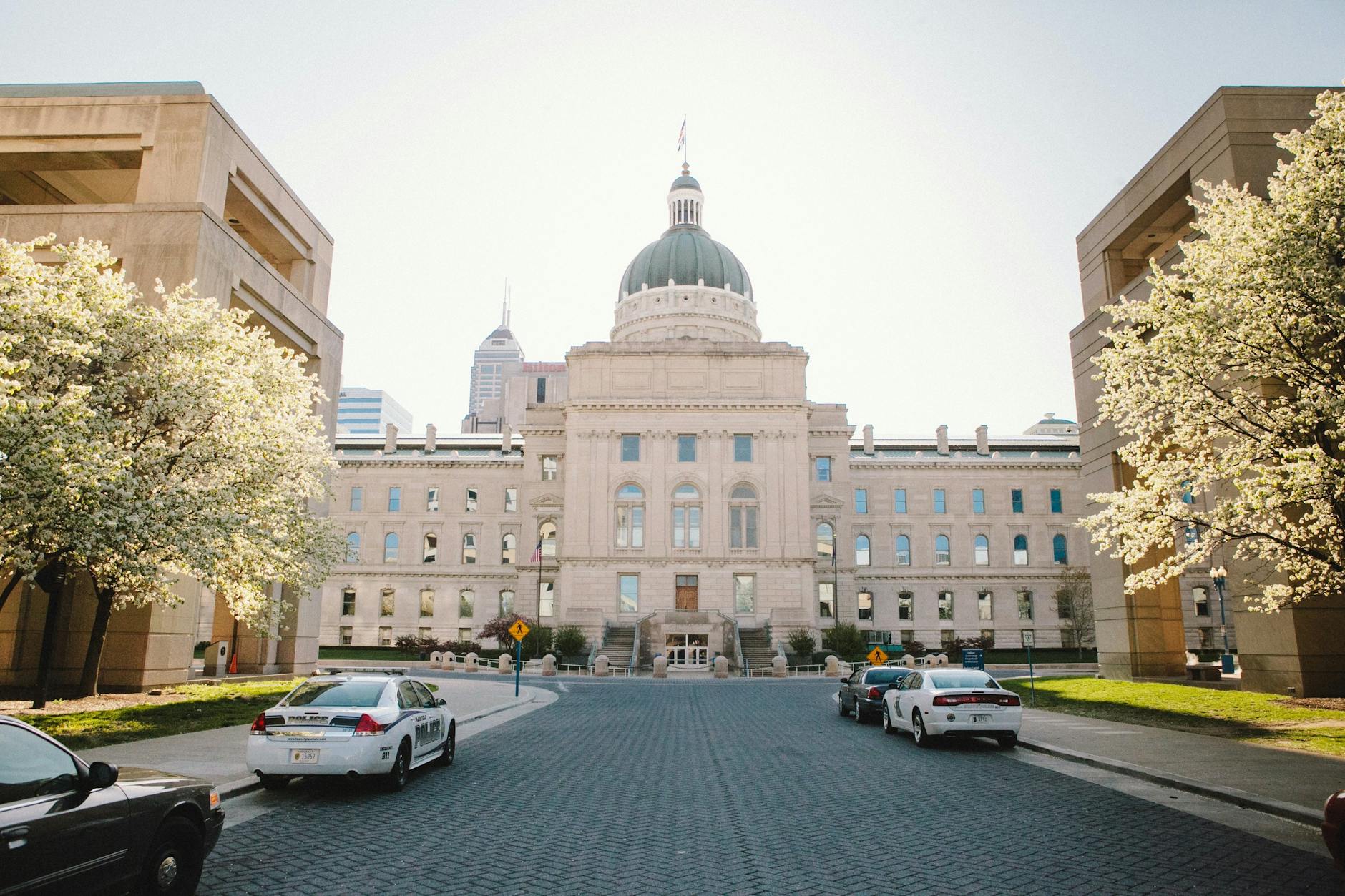
Five of seven Indiana Republican state senators targeted by President Donald Trump lost their party’s nominations on Tuesday to challengers he endorsed, a sweeping repudiation of state-level incumbents that demonstrated Trump’s continued command of the Republican Party ahead of the November midterm elections.
The primary challenge was triggered by a December 11 vote in which the seven senators joined Democrats to block a congressional redistricting plan Trump had demanded. The president vowed retribution and recruited challengers for each of them, turning normally low-profile state legislative races into a $13.5m proxy war over the direction of the GOP.
“Good luck to those great Indiana Senate candidates who are running against people who couldn’t care less about our country,” Trump wrote on Truth Social earlier on primary day. “Let’s see how those RINOs do tonight.”
By the time votes were counted, the answer was decisive. Dan Dernulc, Linda Rogers, Travis Holdman, Jim Buck and Greg Walker all fell to Trump-backed challengers. A sixth incumbent, Spencer Deery, was locked in a race too close to call against Paula Copenhaver. Only Greg Goode survived the president’s endorsement of his opponent Brenda Wilson, the lone incumbent to beat back a Trump-backed challenge.
According to Adimpact, total spending on Indiana state Senate races reached $13.5m in 2026, compared with less than $1m in the previous election cycle. Buck told the Indianapolis Star that $1.3m was spent against him alone. “Money’s the mother’s milk of campaigns,” Buck said. “When you’re up against $1.3 million, issues weren’t the issue. Instead, it’s retribution for December 11.”
How Trump’s Endorsement Performed
Trump carried six of the seven contested districts over Kamala Harris in the 2024 presidential election by double-digit margins, including three districts where he won by more than 30 points. Deery’s district was the narrowest, which Trump won by 7 points. That Deery’s race is the only one still uncalled suggests the president’s endorsement has limits even in deep-red territory.
Deery told CNN while votes were still being counted that Trump “is perhaps not as popular in my district as he once was, but he is still overwhelmingly popular.” The close margin, in a district Republican primary voters gave Trump by double digits, shows the frictions of local incumbency against a national endorsement even when voters approve of both.
The Indiana results land amid a broader season of Republican primaries shaped by redistricting fights and Trump’s intervention. In California, Republican incumbents have turned on each other as new maps force member-on-member primaries. In Alabama, Republicans are pushing for a primary reset as a redistricting dispute heads toward the federal courts. But Indiana was different: the map did not change. The fight was about whether the legislature would change it at Trump’s behest, and the senators who said no lost their seats for it.
The National Picture
The Indiana result is a signal for Republican primaries still to come. On May 16, Louisiana holds its US Senate primary, where Trump has endorsed Representative Julia Letlow against incumbent Senator Bill Cassidy, one of the seven Republican senators who voted to convict Trump after the January 6 Capitol attack. On May 19, Kentucky Representative Thomas Massie, among the few congressional Republicans willing to openly challenge the president, faces Trump-endorsed Navy SEAL veteran Ed Gallrein, who leads in early polling.
Georgia Republicans choose a gubernatorial nominee the same day. Trump has backed Lieutenant Governor Burt Jones, though healthcare executive Rick Jackson currently leads the field with 24 per cent in early surveys. Each of these races will test whether the Indiana pattern holds: the president’s endorsement overwhelming local incumbency at every level of the ballot.
Trump’s Hold on the Party
An ABC News/Washington Post/Ipsos poll conducted from April 24 to 28 found 85 per cent of Republican voters approved of Trump’s job performance, with 65 per cent saying the GOP should follow Trump’s lead rather than head in a different direction. Trump’s overall approval rating stood at 37 per cent, the highest of either of his presidential terms. Just 25 per cent of independent voters approved.
The Indiana outcome will reinforce the reluctance of most Republican elected officials to publicly split with Trump, even on votes where local interests or institutional prerogatives argue otherwise. Defying the president on a procedural or substantive vote can now end a Republican incumbent’s career, not just in Congress but at the state legislative level.
The question for November is whether candidates who won primaries by running on Trump’s grievances can hold seats that Trump himself won comfortably but that independent voters have since abandoned. Democrats are widely expected to gain control of the House and make gains in the Senate, meaning the Republican majorities these Trump-aligned nominees would enter will be narrower than the ones their predecessors served in.

Ramona Castellanos
US politics correspondent covering Congress, primaries and the Trump administration. Reports from Washington.