US solar factory financing freezes under Trump China ownership rules
Solar manufacturers, banks, and insurers have stopped working with at least six recently built US panel factories over uncertainty about their eligibility for clean-energy subsidies. The pullback jeopardises more than a third of domestic solar module capacity and threatens to raise electricity prices.
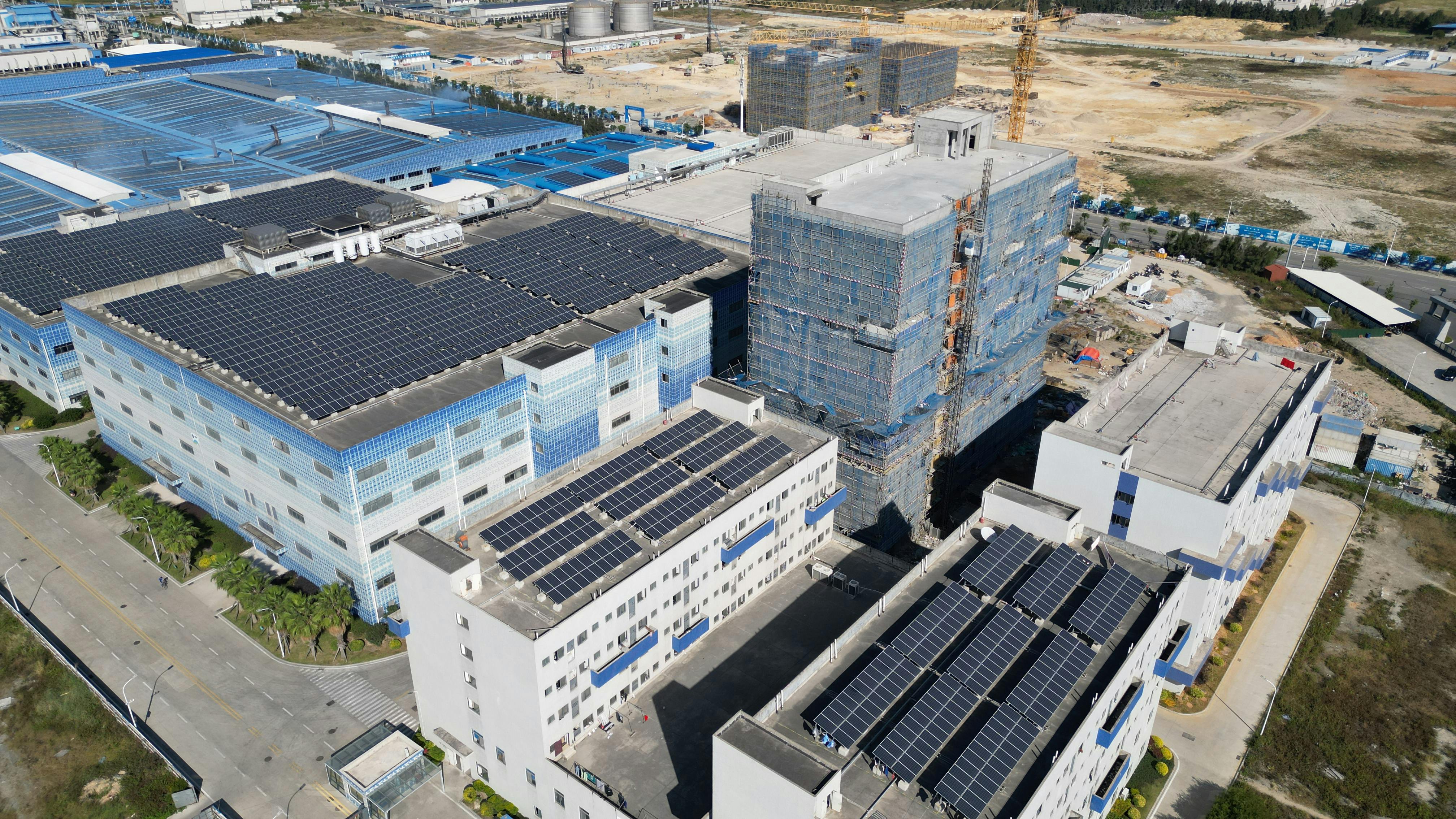
Solar manufacturers, banks, and insurers have stopped working with at least six recently built US panel factories over uncertainty about whether their China ties disqualify them from clean-energy subsidies. The freeze affects plants that account for more than a third of domestic solar module capacity.
The pullback, reported for the first time by Reuters on Friday, follows Trump administration policies that restrict Chinese-owned companies from accessing tax credits created under the 2022 Inflation Reduction Act. A federal trade court last month struck down a separate Trump tariff on most imports, but the clean-energy ownership rules operate independently and have not been challenged.
“It’s holding up financings of desperately needed solar and storage projects,” said Keith Martin, an attorney at Norton Rose Fulbright who advises on renewable energy tax deals.
The six affected factories represent at least 25 gigawatts of the roughly 66 GW of US solar module manufacturing capacity, according to Wood Mackenzie. The uncertainty comes from the Republican-backed tax and energy law passed in 2025, which cut many Biden-era climate subsidies and barred firms with more than 25 per cent Chinese ownership from claiming the remaining credits. The US Treasury has yet to issue full implementation guidance, so manufacturers, lenders, and insurers cannot determine which ownership structures comply.
Sunrun, the largest US residential solar installer, circulated a pared-down supplier list in January that excluded manufacturers with China links, including Canadian Solar, JA Solar, Jinko, LONGi, and Trina. Those companies had already restructured to reduce Chinese ownership below the statutory threshold. Rival installer Palmetto has taken the same approach.
“We have taken a conservative stance and do not procure equipment from manufacturers that would raise compliance concerns,” said Patrick Jobin, Sunrun’s deputy chief financial officer.
Banks and insurers step back
The financing freeze has spread beyond solar installers. Morgan Stanley, JPMorgan, and Goldman Sachs have scaled back tax-equity financing, the mechanism by which banks provide capital to clean-energy projects in exchange for the projects’ tax credits. Lenders are concerned the Internal Revenue Service could retroactively invalidate credits claimed by facilities using panels from China-linked factories, Reuters reported.
Insurers have also refused to cover companies against the risk of being barred from the tax-credit programme. Antony Joyce, a tax-insurance specialist at Marsh, told Reuters that underwriters would not take on the exposure because the potential losses were too difficult to model without clear Treasury rules.
“This is undoubtedly going to continue to increase the cost of power in the United States,” said Aaron Halimi, chief executive of Renewable Properties, a San Francisco-based solar developer.
A trade group representing First Solar, the largest US-owned panel manufacturer, and South Korea’s Hanwha Qcells has urged the Treasury to enforce the ownership restrictions strictly. Those companies, along with REC, Silfab, and Elin, have no China ownership ties and stand to gain market share if competitors are disqualified.
“The companies that are best positioned right now are certainly the ones that didn’t have clear ownership ties to a country of concern,” said Peter Henderson, a principal at consultancy Baker Tilly.
Restructuring efforts fall short
Chinese manufacturers have taken steps to meet the ownership rules, but market participants say the efforts have not reassured lenders or customers. JinkoSolar and Vietnam-based Boviet Solar are seeking outside investors to dilute Chinese stakes below the 25 per cent cap. Illuminate USA, a joint venture between China’s LONGi and Chicago-based Invenergy, reduced LONGi’s ownership below the threshold but kept financial links through profit-sharing and supply agreements.
The company, which employs roughly 1,700 workers at its Ohio factory, told the IRS in a filing that “the continued operation of Illuminate USA and other U.S. manufacturers remains at risk.” The plant was built in 2024 and is one of the largest solar module factories in the United States.
“Very few Chinese manufacturers are actually decoupling themselves from their U.S. factories entirely,” said Elissa Pierce, an analyst at Wood Mackenzie. “There isn’t necessarily a blueprint for how to do it.”
What happens next
The Treasury Department is expected to issue guidance on which ownership and control structures qualify for subsidies, but no timeline has been made public. Until it does, the financing logjam is likely to persist and factory output could fall well below capacity.
The standoff puts the administration in a bind. Trump has called for a rapid expansion of the US power grid to meet electricity demand from artificial intelligence data centres, and energy analysts say solar paired with battery storage is the fastest way to add new generation capacity. China controls roughly 80 per cent of global solar equipment manufacturing, so any rapid decoupling would be economically disruptive.
Nearly $43 billion in solar manufacturing investment has been announced in the United States since the 2022 climate law, supporting an estimated 48,000 projected jobs. Factory construction has already outpaced domestic demand for the equipment, and a sustained financing freeze could leave plants operating well below capacity just as electricity demand rises rapidly.
Marcus Holloway
Markets editor covering UK gilts, sterling and the Bank of England. Previously a fixed-income strategist in the City.